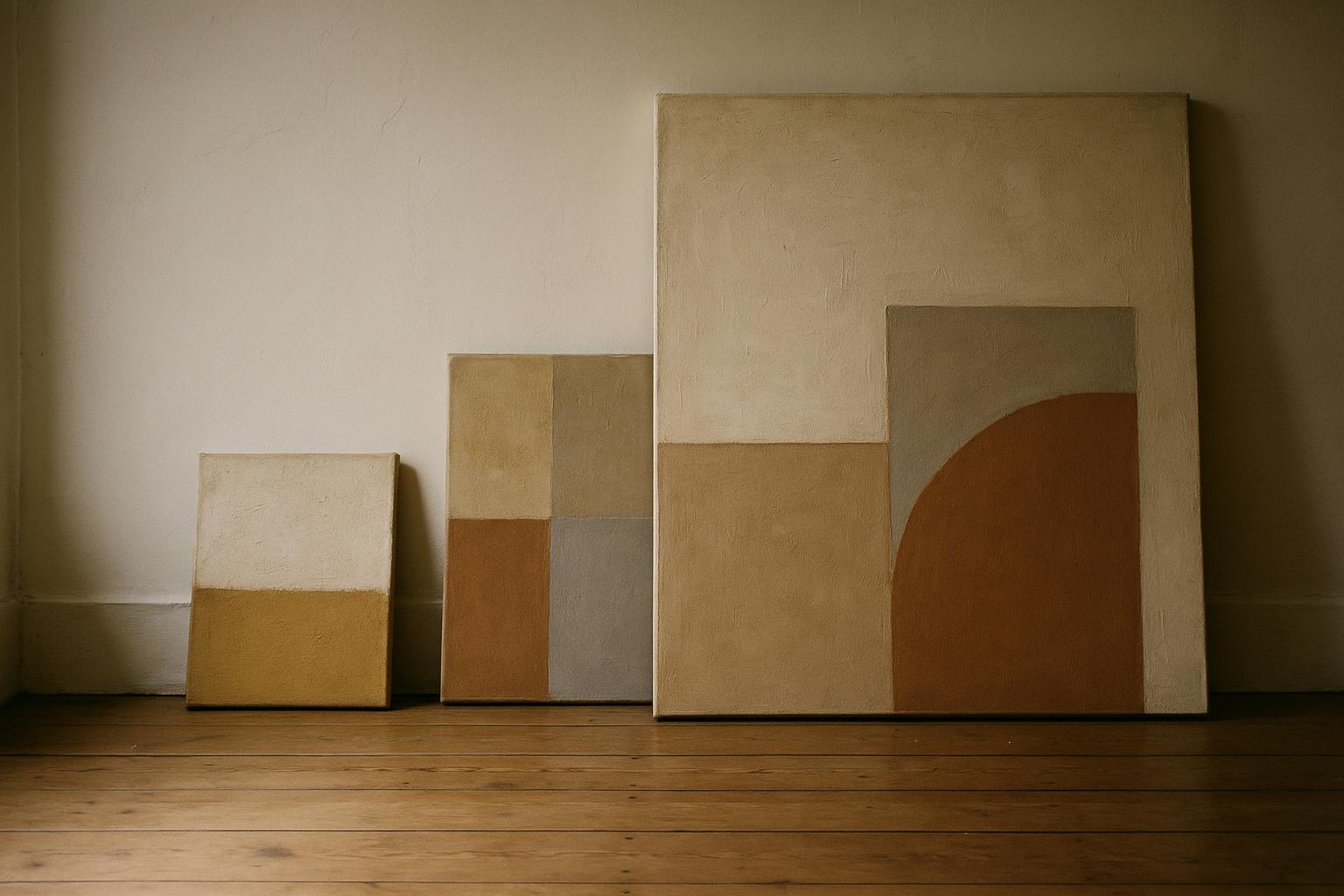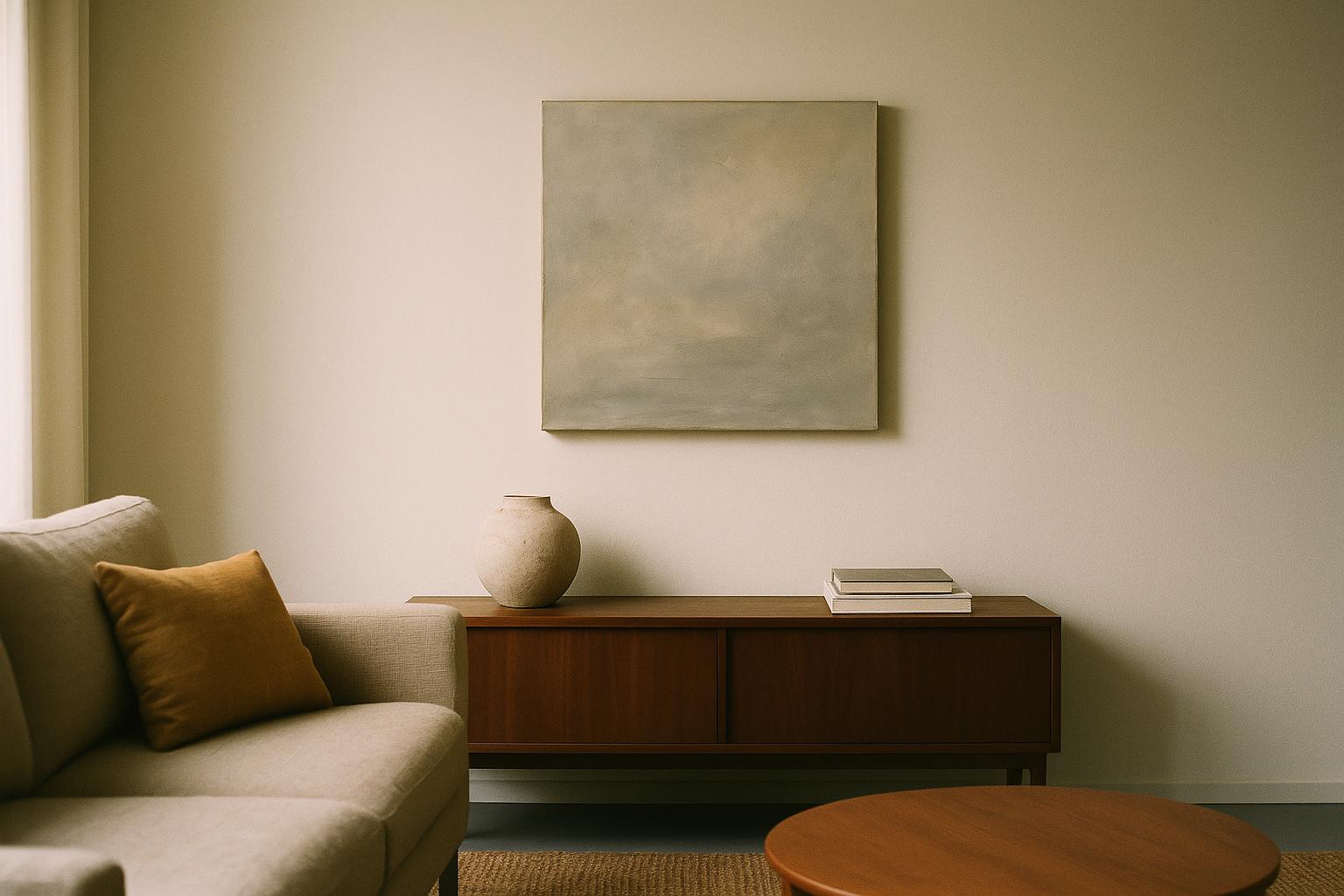
A first original painting is different from a first chair or a first watch. It doesn't improve anyone's life noticeably. But years later — and it always takes years — you realise it was one of the best things you ever bought.
The trouble is that nothing about the buying process makes you feel that way at the time. You're looking at a photograph on a screen, trying to decide whether a piece made by someone you've never met, who lives somewhere you've never been, is worth several thousand dollars of the money you worked for. Every part of that feels wrong.
Here's a short, honest guide to doing it anyway.
Start with what arrests you, not what impresses you
Scroll slowly. Your eye knows things your mind doesn't. If a piece stops you — even briefly, even for a reason you can't explain — pay attention to that. Don't scroll back, don't overthink, just save it and keep going.
At the end of a browsing session, look at what you saved. If the same piece is still there in the morning, and still there a week later, that's a signal. It means the thing survived your second-guessing, which is the hardest test a painting has to pass.
What you're looking for is not "I like this" — that's fleeting. You're looking for "I keep thinking about this." Those are different sentences.
Forget about investment
The moment you think of art as an investment, you've started making the wrong decisions. You'll buy pieces you don't love because other people think they'll appreciate. You'll skip pieces you love because they "aren't a sure thing." Neither move makes you happier or wealthier.
A painting you love is an investment in the specific walls you'll look at every day for the next twenty years. That's the return. Everything else is speculation, and we're not particularly good at speculation.
Measure the wall before you buy
This is the single most common mistake in first-time collecting. People fall for a piece on-screen, buy it, and discover that on the wall it either shrinks into irrelevance or crowds everything around it.
Before you commit, stand at the wall with a tape measure and mark the rough boundaries of where the piece will hang. Look at the space. Sit with it. A small piece in the wrong spot feels fussy; a large piece in the wrong spot feels aggressive. Scale is always the thing.
If the wall is 8 feet wide and you're buying a 16×20" piece, you're going to spend the next ten years wishing you'd gone bigger. Trust us.
It's OK to start small, but only if you love it small
There's a moment in a collecting life where people say things like "I want a starter piece." We'd gently push back on this. A piece you bought because it felt safe and cheap is a piece you'll replace the first time you find something you actually love.
Better: start with the smallest piece by the artist you're most drawn to. A piece that's 11×14" but painted by the right hand will teach you more about what you love than a 36×48" piece that was a compromise.
Buy from the artist, not the market
The market is a game played mostly by people who already own a lot of art. For a first piece, the most useful relationship is between you and the person who painted it. When you buy directly from an artist — through Maestra, through a gallery you trust, through a studio visit — you're investing in someone's practice, not a ticker.
A ten-year-old piece by an artist you love is worth more to you than a ten-year-old piece by an artist you chose because of a price chart. The former will still mean something in 2045. The latter will just be on your wall.
Ask one question before you commit
We think every first-time buyer should ask themselves this before hitting buy:
If this piece were twice the price, would I still want it?
If the answer is yes, buy it. If the answer is maybe, wait. If the answer is no, you're buying it because it feels like a deal, which is a bad reason to buy an original painting.
Good art is rarely a deal. It's either worth the asking price to you, or it isn't.
The first one is the hardest. Everything after is easier.
The first original on a wall changes how the wall feels. You'll walk past it fifty times before you really notice it again, and then suddenly — standing in the kitchen, on the phone with a plumber, on an ordinary Tuesday — you'll look at it and realise it's exactly the thing that wall needed.
That's the thing we're selling. Not an investment. Not a status object. A thing you'll be glad to have looked at, ten thousand times.